Roof to butt to root to soil
Rain falls on the roof, runs into a butt, goes onto the soil at the base of a plant, and is held there by organic matter and mulch. Every step you skip means a turn of the tap.
Start catchingTreated mains water is pumped, cleaned and piped to your tap, then sprayed on a lawn in the midday sun. Rain lands on your roof for free. Catch it, store it, put it at the roots and keep it there.
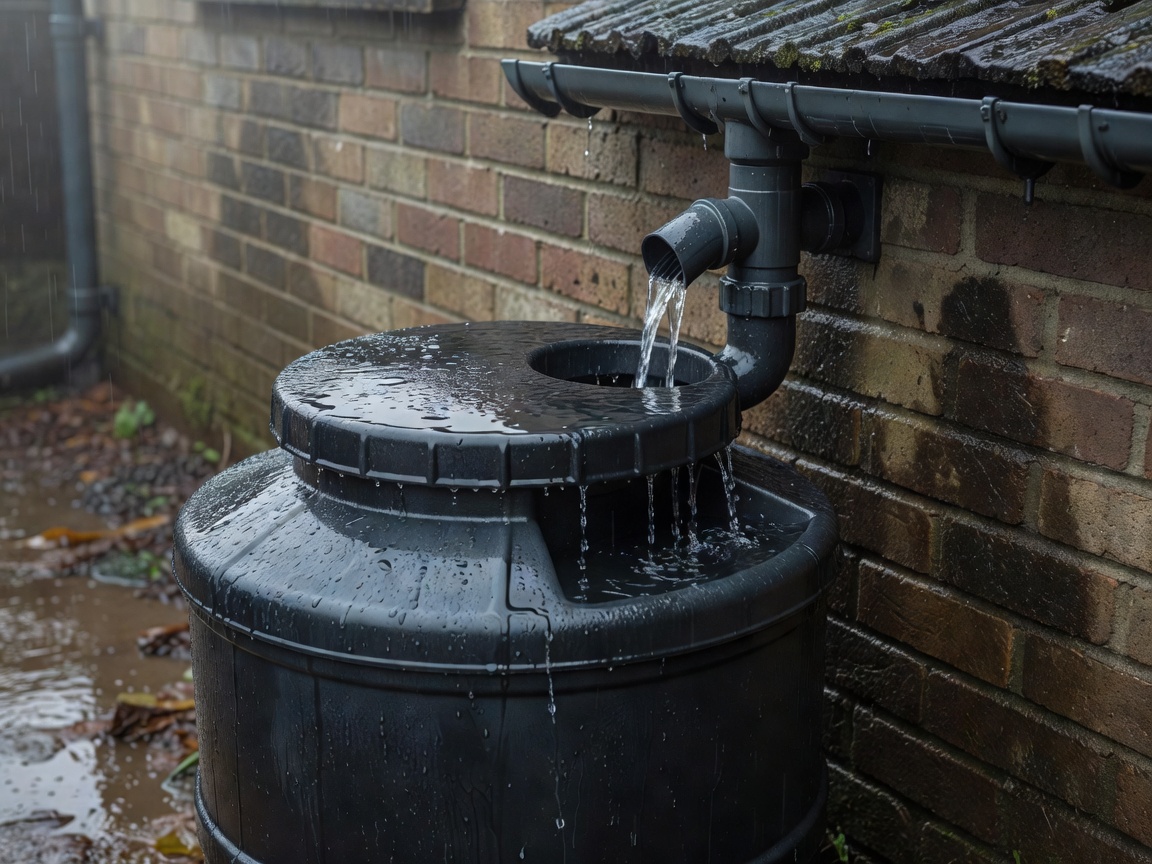
Rain falls on the roof, runs into a butt, goes onto the soil at the base of a plant, and is held there by organic matter and mulch. Every step you skip means a turn of the tap.
Start catchingA downpipe diverter fills the butt and sends overflow back to the drain automatically.
One good soak a week beats a daily sprinkle. Roots follow water down.
The maths is friendly: one millimetre of rain on one square metre of roof is one litre of water. A modest 20 m² shed or garage roof in a place that gets 600 mm of rain a year sheds roughly 12,000 litres before losses. A house roof gives several times that. Even a single 200-litre butt refilled through the season adds up to thousands of litres you didn't pay for.
Fit butts to every downpipe you can reach, including sheds, greenhouses and porches. Greenhouse gutters are worth it: the water lands right where your thirstiest plants are.
Most garden water is wasted on the surface. A quick sprinkle wets the top centimetre, evaporates by lunch, and trains roots to stay shallow. Instead, water less often but thoroughly, aimed at the base of the plant, ideally in the early morning. A can without a rose, a seep hose under mulch, or a plastic bottle with the base cut off pushed into the soil next to tomatoes all do the job.
Prioritise: seedlings and new plantings first, containers next, then fruiting crops like tomatoes, beans and courgettes as they flower and swell. Established trees, shrubs and most perennials rarely need watering once they've had a year to root. Lawns go brown in drought and recover when it rains; let them.
Every bit of organic matter you add from the soil loop raises how much water your soil can hold. Mulch after rain, never onto dry ground. Fill gaps between plants so leaves shade the soil. A hedge or windbreak cuts drying wind across exposed allotments. On slopes, shallow swales or low terraces slow run-off so it soaks in instead of washing away.
Beth Chatto's Gravel Garden at Elmstead Market in Essex, one of the driest corners of Britain, was planted on an old car park in the early 1990s and famously has not been watered since it established. Her book The Dry Garden is still the best primer. The lesson for any plot: put Mediterranean herbs, sedums, grasses and deep-rooted perennials in the sunniest, driest spots, and save your butt water for the vegetables.
Bath and shower water can keep ornamentals going in a drought. Use it within a day, don't store it, and keep it off leafy crops you eat raw. Skip water with bleach, dishwasher detergent or water-softener salts. Waterwise, the UK's independent water-efficiency body, publishes sensible guidance on household water use worth a read.
We use cookies
Essential cookies keep this site working. Optional ones help us see what is useful. You can change your choice at any time. Read more