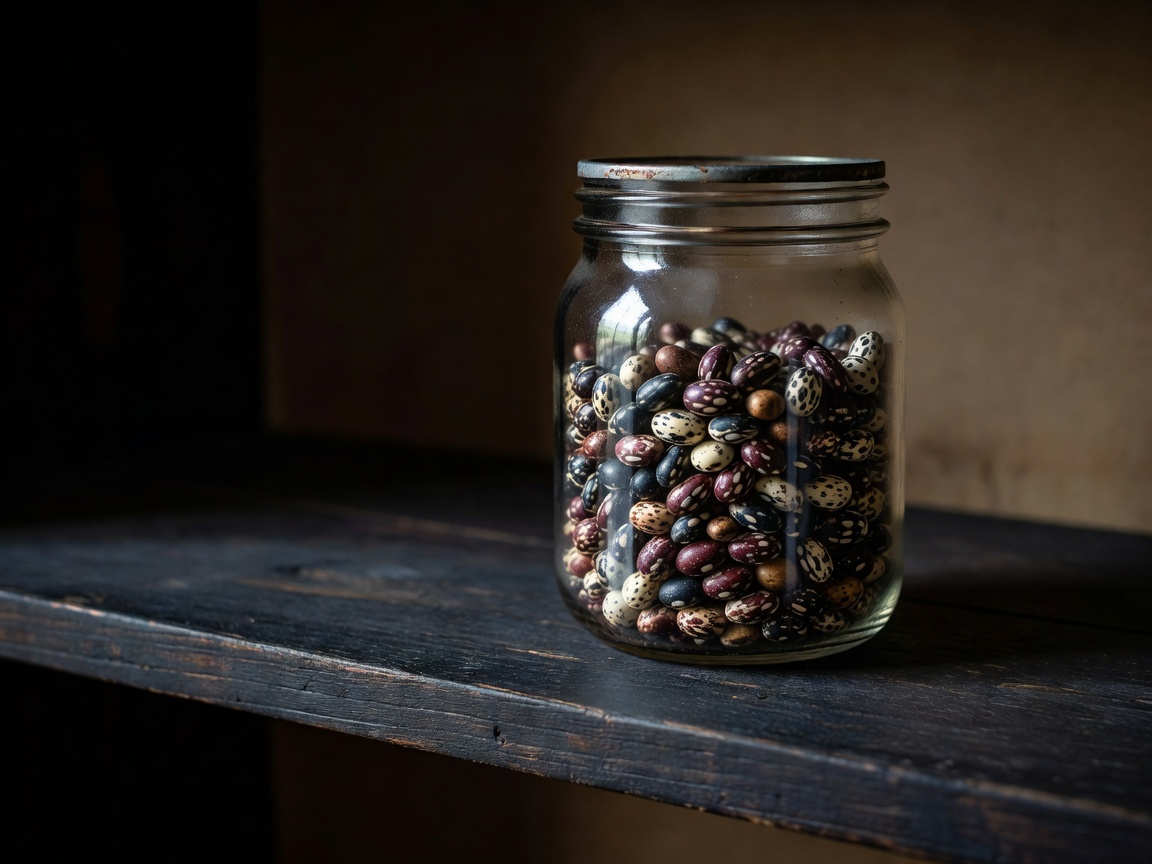
Every packet you buy is a loop left open. Save seed from your best plants and each year's crop gets a little better suited to your soil, your weather and your pests. And it's free.
The Seed Loop at a Glance
The loop in one line
Grow it, save it, swap it
Let a few of your best plants run to seed. Dry the seed, store it cool and dark, sow next year's crop from it, and pass the surplus on. Add native plants and the insects that pollinate those crops have something to live on.
Beans and peas: leave pods on the plant until they rattle, then shell.
Method
Wet seed
Tomatoes: scoop seeds, ferment in water for a few days, rinse, dry on paper.
Open-pollinated, not F1
F1 hybrid seed comes from crossing two distinct parent lines. The plants are uniform and often vigorous, but their seed won't grow true: the next generation scatters into unpredictable types. Open-pollinated and heritage varieties breed true if they aren't cross-pollinated, so you can keep them going indefinitely. Check the packet. If it says F1, enjoy the crop and don't bother saving.
Start with the easy four
Some crops mostly pollinate themselves, so they rarely cross with neighbours. That makes them the perfect first saves:
French and climbing beans: leave a few pods to yellow and dry on the plant.
Peas: same approach; let the pods go papery.
Tomatoes: pick a ripe fruit from your best plant, ferment the seeds briefly, then dry.
Lettuce: let one plant bolt, then shake the fluffy seed heads into a paper bag.
Runner beans, squash, sweetcorn and brassicas cross readily with other varieties, often via insects. Save those once you're confident and can isolate or hand-pollinate.
Drying and storing
Damp seed rots; warm seed ages fast. Bring pods in before autumn rain, finish drying them indoors on a tray for a week or two, then shell. Store in paper envelopes inside a sealed jar, somewhere cool, dark and dry. A sachet of silica gel in the jar helps. Most vegetable seed keeps three to five years this way; parsnip and onion are short-lived, so save them fresh each year. Do a quick germination test on damp kitchen paper before sowing old stock.
Why native plants matter
Insects co-evolved with the plants around them. Douglas Tallamy's work in North America, summarised in Nature's Best Hope, shows native plants support far more caterpillars, and so far more birds, than imported ornamentals. The same holds in Britain: a 2019 study counted more than 2,300 species associated with native oaks. You don't need a meadow. A native hedge instead of a fence, a patch of knapweed, bird's-foot trefoil and field scabious among the veg, or a strip of lawn left for Plantlife's No Mow May all give pollinators and predators a foothold. More insects means better pollination and more help from the predator loop.
Where seed is kept
You're not alone in this. Garden Organic's Heritage Seed Library near Coventry keeps hundreds of vegetable varieties that aren't sold commercially and shares them with members. In the US, Seed Savers Exchange, founded in 1975, maintains its collection at Heritage Farm in Decorah, Iowa. Kew's Millennium Seed Bank at Wakehurst in West Sussex banks wild plant seed from around the world, and the Svalbard Global Seed Vault, opened in 2008, backs up crop collections in the Arctic. Your jar of beans is the smallest link in the same chain.
Seasonal tasks
Germination-test old seed before sowing.
Mark the plants you'll save from with a tie or cane.
Sow native wildflowers into bare patches.
Leave the best lettuce to bolt for seed.
Ferment and dry tomato seed from early ripe fruit.
Don't deadhead everything; leave seed for birds.
Bring in bean and pea pods before heavy rain.
Dry, shell, label and jar everything.
Plant native hedging while it's bare-root season soon.